
Monochrome: The Most Important Watercolor Exercise
You can either watch the video, or read the text below. Both options contain the same content.
If I could recommend just one exercise for learning watercolor, it wouldn’t require a full palette or any fancy tools. It would be this: painting with just one color.
All you need is a tiny piece of watercolor paper, a mop brush, and one of your favorite colors.
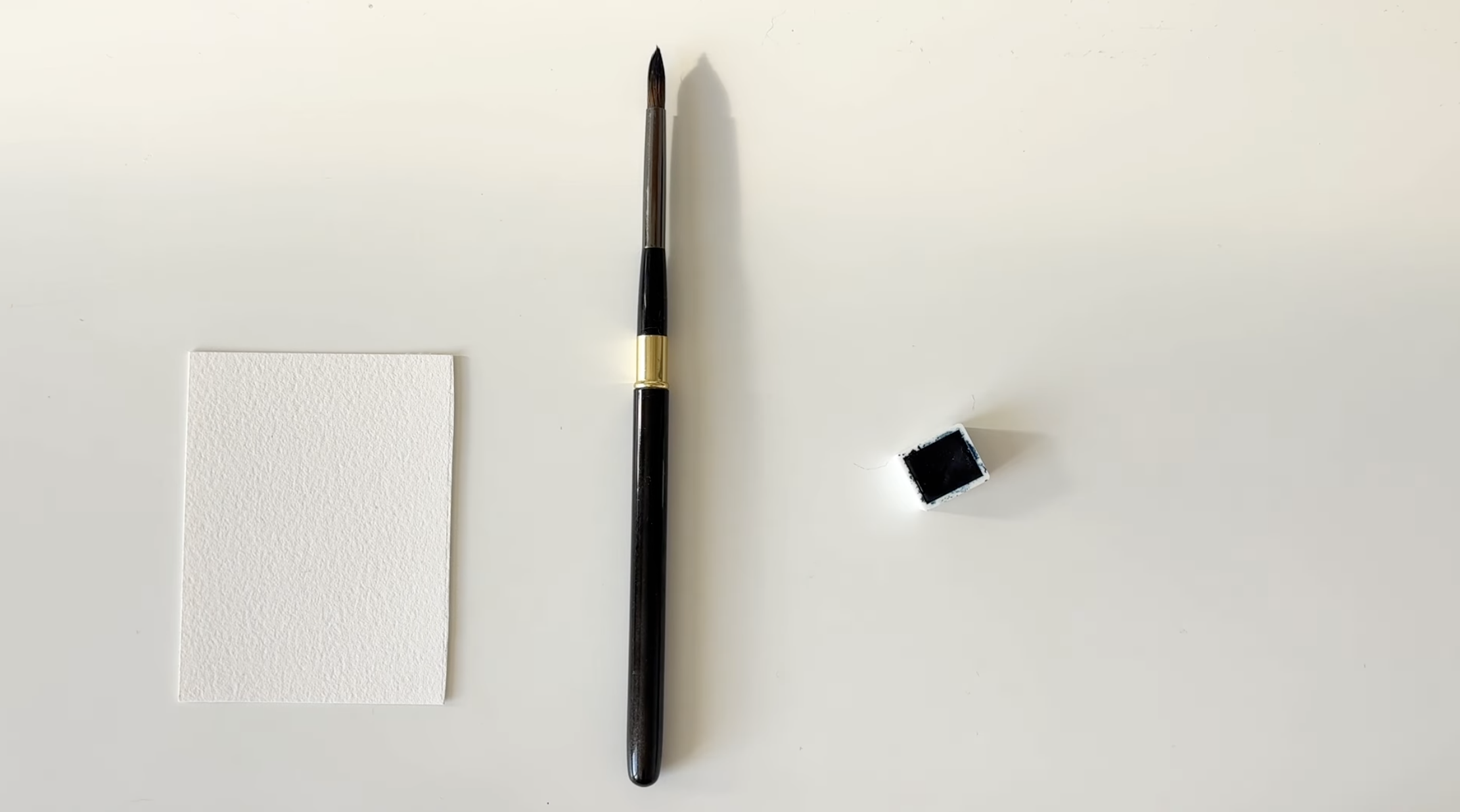
For me, monochrome painting is such a beautiful way to explore the heart of watercolor. With just one color, you can truly focus on the essentials: layering, transparency, and water control, without being distracted by complex color choices. It sets the tone for everything that follows.
Start with a gradient exercise
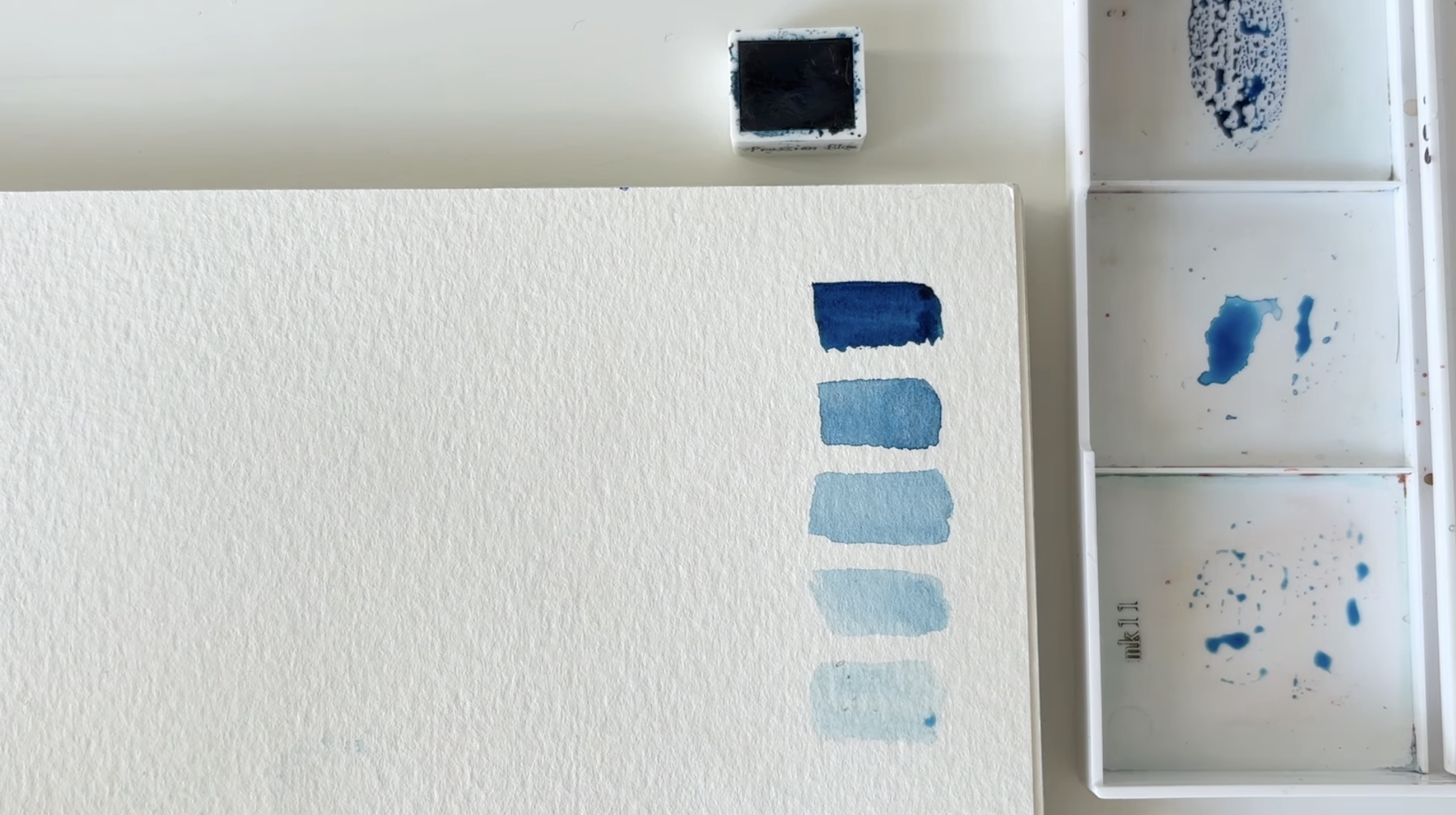
My favorite color for this is Prussian blue. And to get to know it better, I always start with a little gradient exercise.
I begin with the most intense tone by picking up lots of paint with a fairly dry brush. If you’re using solid pans like me, the paint might look quite dark when dry. That’s totally normal.
Then I slowly add water, little by little, to shift toward the lightest tone. I usually test out 4 to 5 values before starting my painting, just to keep things simple. You can of course try more steps if you like. It’s actually really calming and satisfying to do.
Don’t be afraid to go very light, like almost pure water. That soft, pale wash will become the most luminous part of your painting.
Paint a clear sky with the lightest color
Once I feel familiar with the color, I begin my painting. This time, I’m going for a tiny, peaceful landscape: a clear sky, some soft mountains, and a quiet boat floating on the water.
I’ll start with the lightest layer. That’s something special about watercolor: since the paint is transparent, we always begin with the lightest tones and build up gradually.
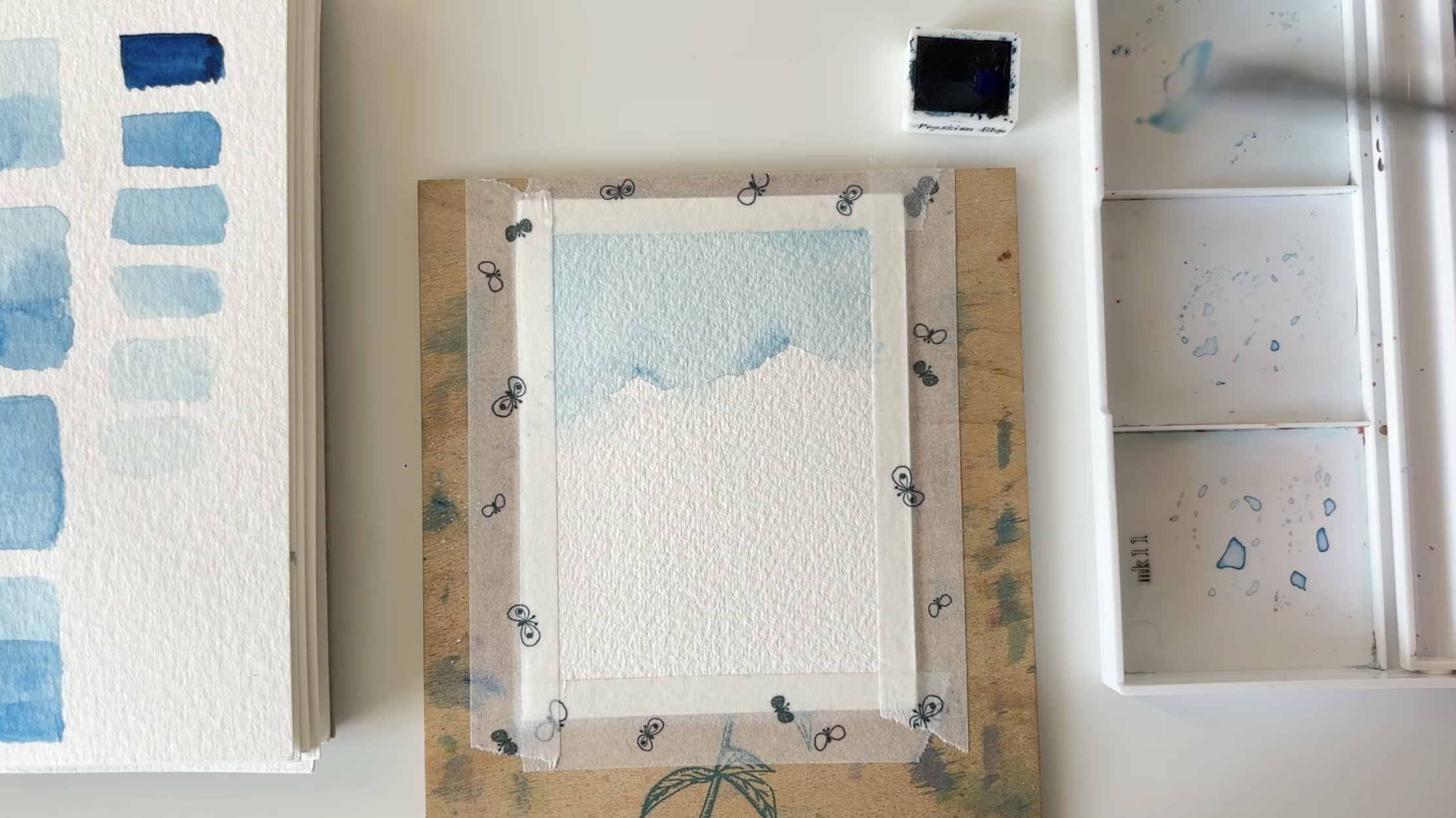
Paint the mid layers for mountaints
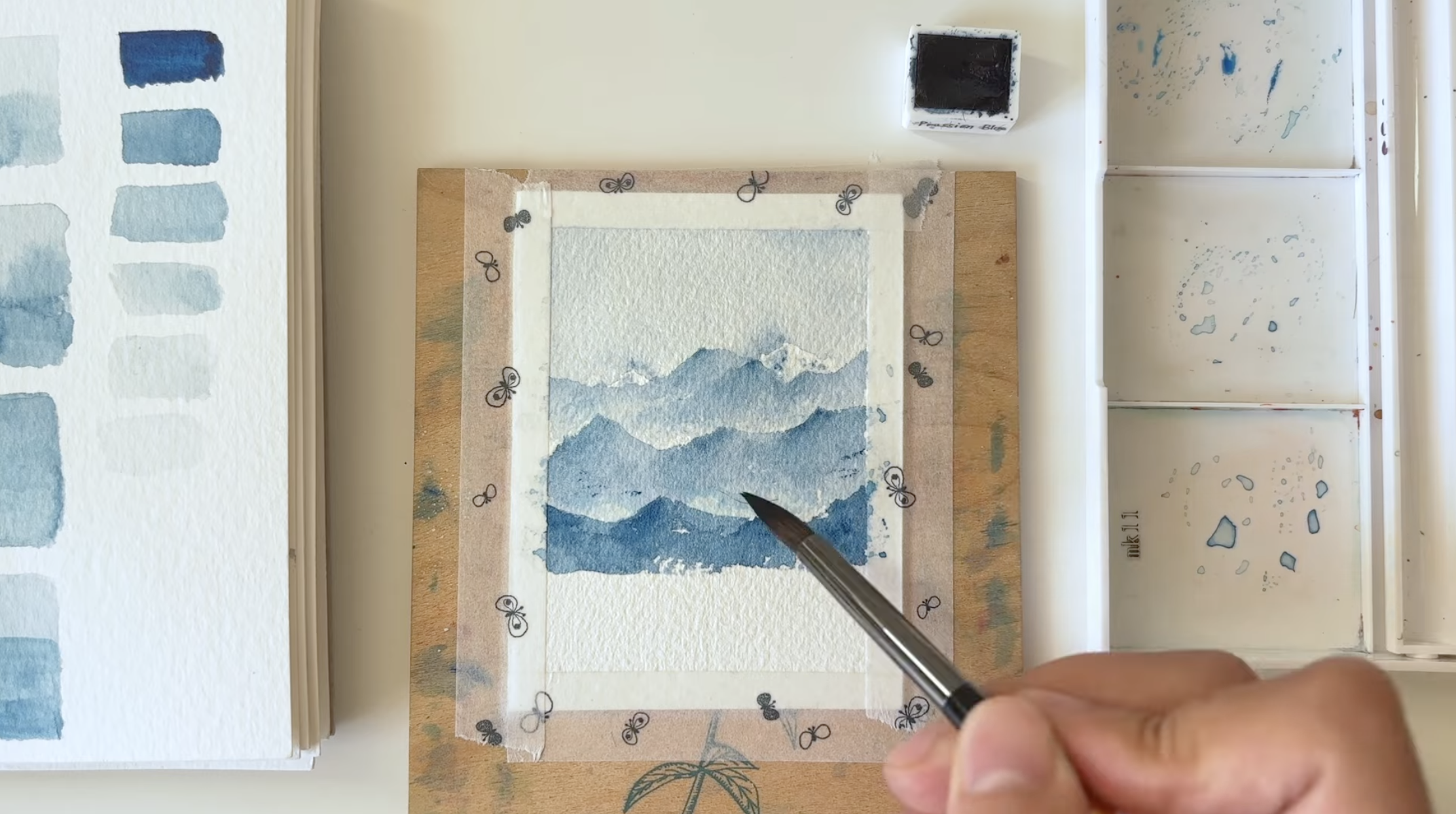
Now I’ll paint 2 or 3 layers of mountains, from the farthest to the nearest. Each one will be a bit darker than the last, simply by using more paint with less water.
Patience is key in watercolor. Each layer needs to be completely dry before adding the next, otherwise the shapes will blur together. But in this tiny format, it dries faster, so you don’t have to wait long and can keep painting smoothly.
I like to leave a few tiny white gaps between the mountain layers. It always brings in light and some variations to a monochrome painting like this.
Add tiny trees and details with a darker tone
This small format doesn’t take long to fill the page. That’s one of the things I love about painting tiny. It makes water control easier, and the whole process feels more playful and relaxed.
Now I’ll add a few details with a darker tone, some texture on the mountains to bring them to life.
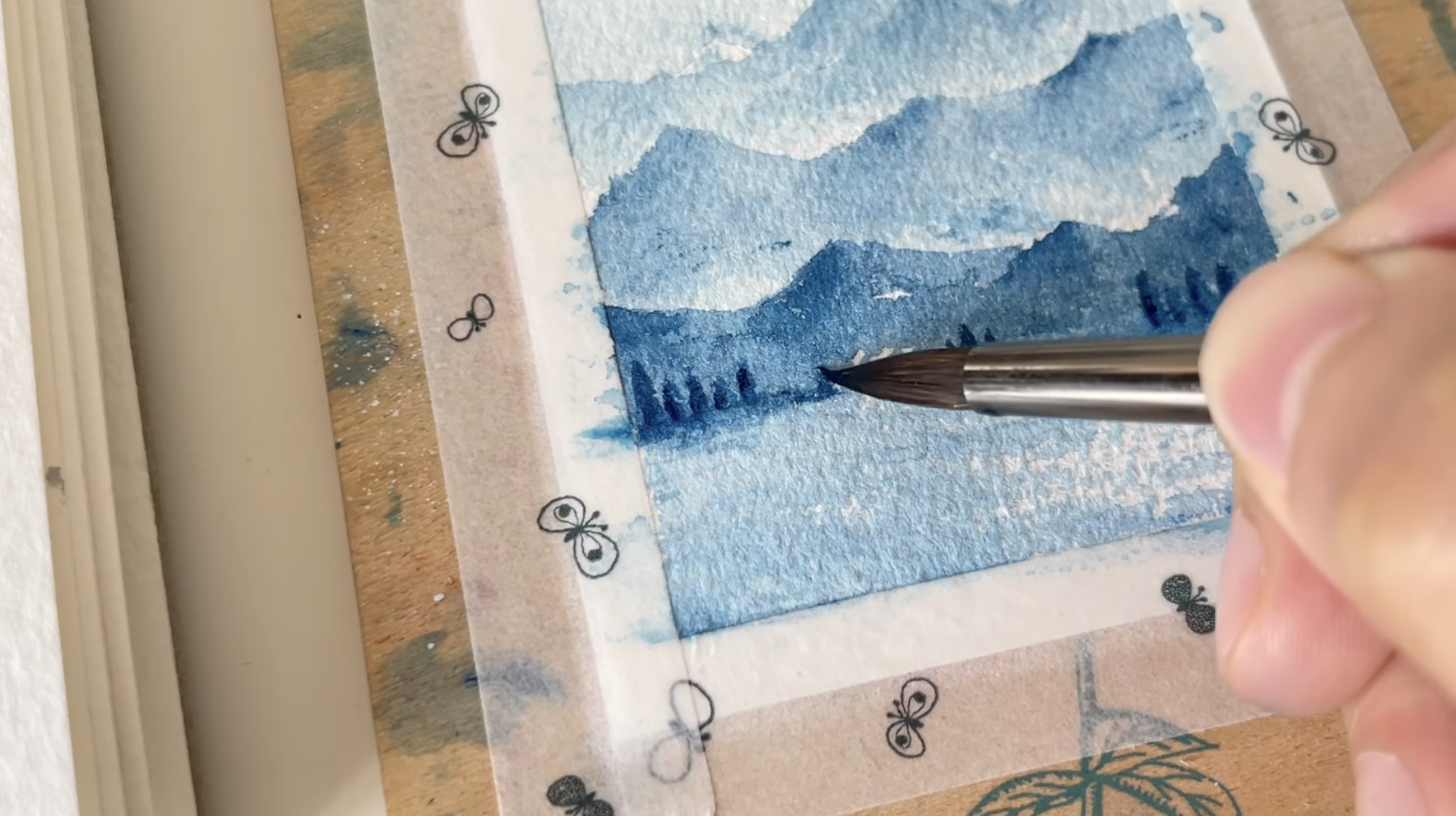
Paint the boat with the darkest tone (optional)
And finally, for the boat, I’ll use the darkest tone in this painting to make it stand out. You can also use a small detail brush for this part, if you find it easier to control.
It’s optional to add this tiny boat. If you don’t feel very comfortable to do so, just leave the painting as it is. It’s already a lovely piece!
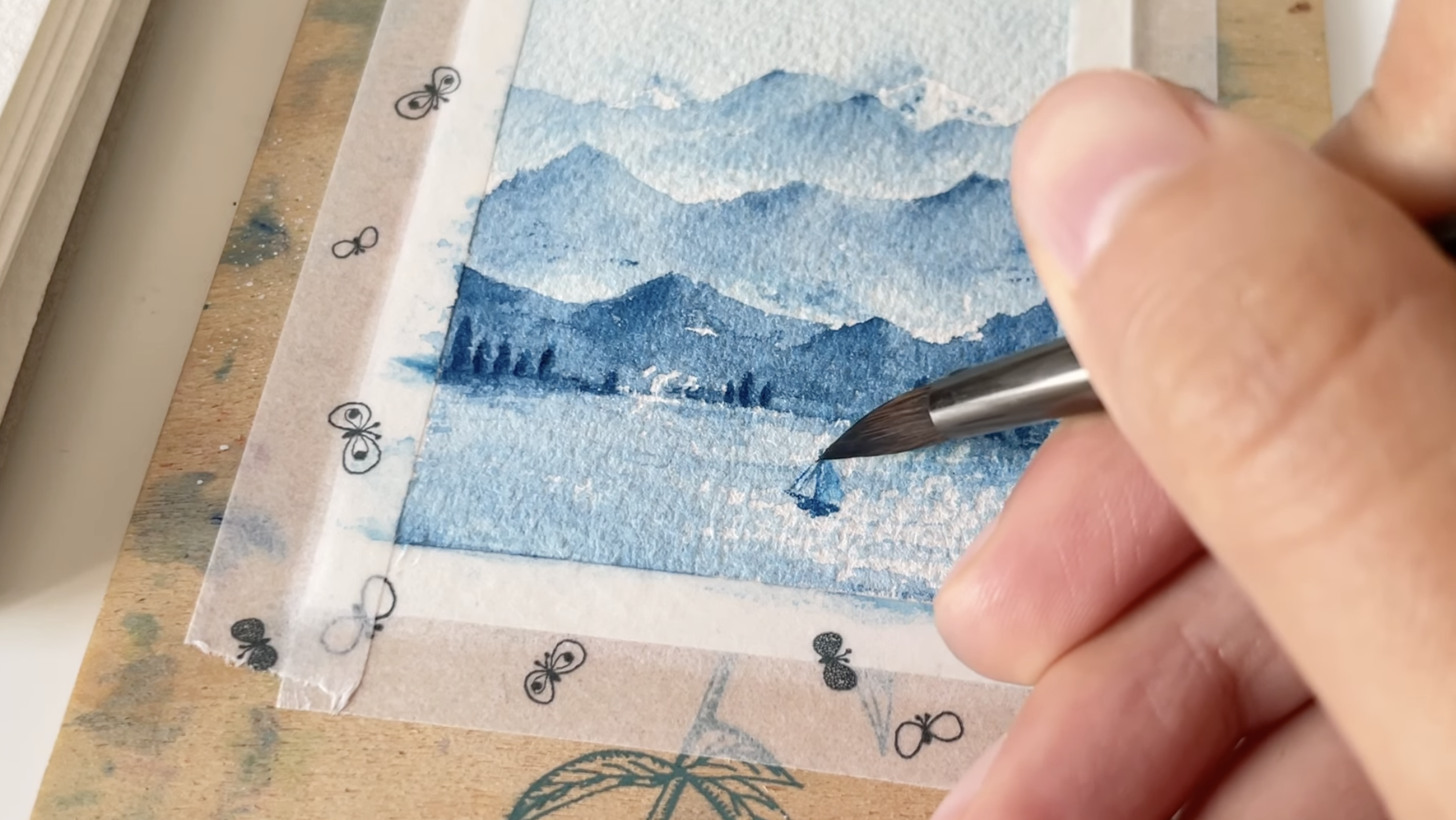
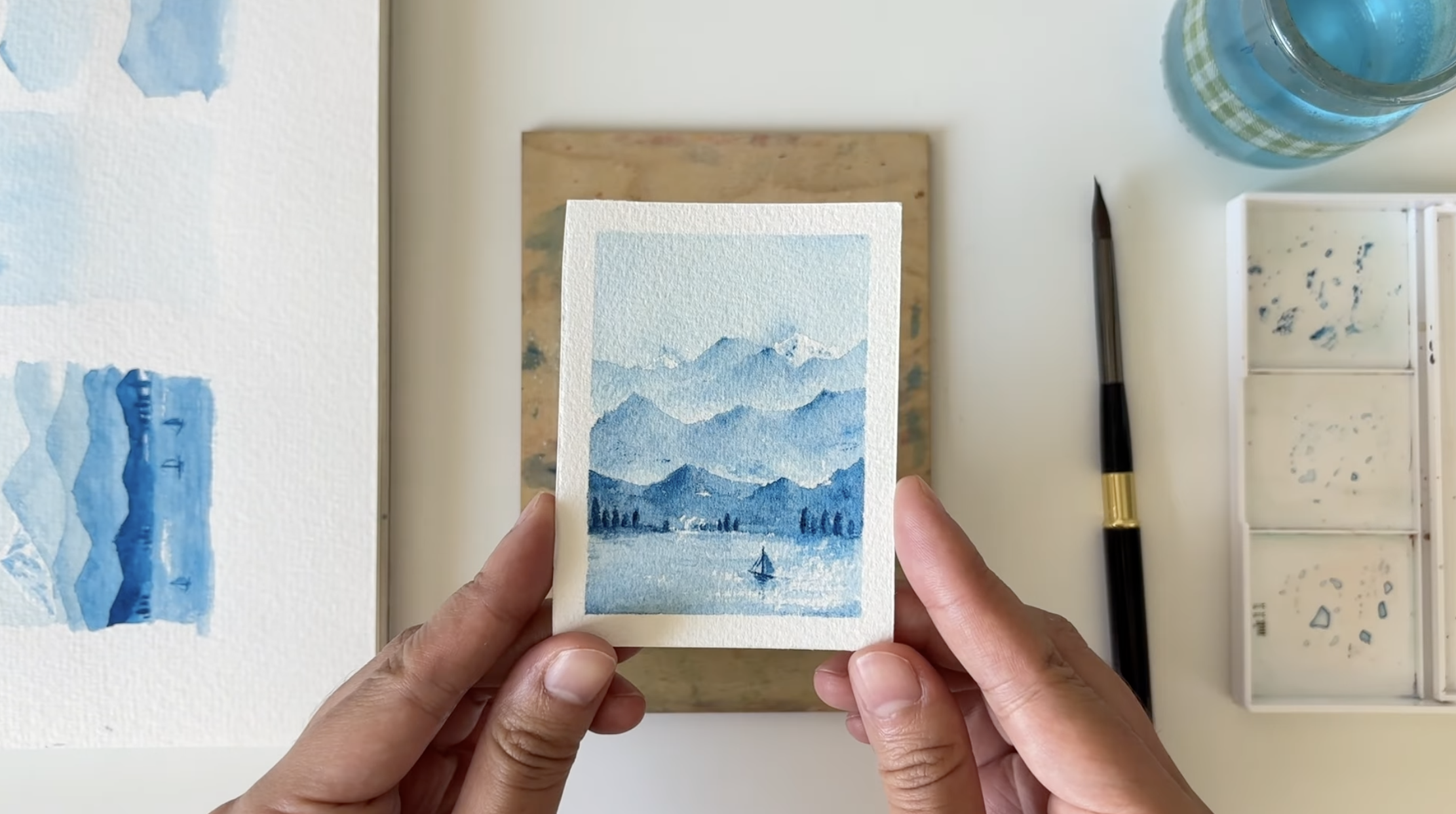
This tiny landscape may look simple, but it carries everything that makes watercolor magical: light, depth, and softness, all from just one color. I hope this tiny landscape inspires you to try your own version!
Monochrome painting is not just a good exercise to practice technique; it’s also a calming way to connect with your brush and paint.
Want to learn watercolor?
I made an online course that’s designed to help you build confidence, stay motivated, and have fun exploring watercolor essentials at your own pace.